


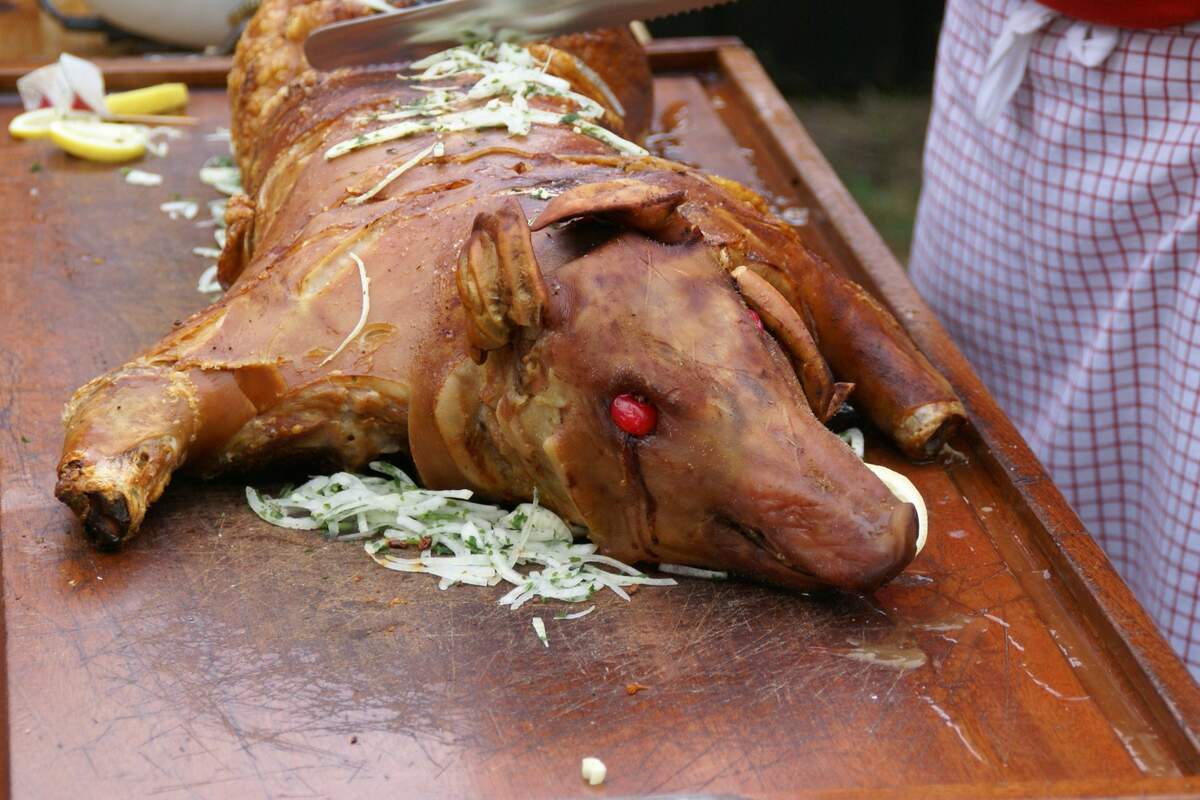
National Roast Suckling Pig Day
National Roast Suckling Pig Day, observed annually on December 18, celebrates the culinary tradition of roasting a whole suckling pig. A suckling pig is a young piglet that has not yet been weaned from its mother; when roasted, it is known for tender meat and crisp skin. The dish has appeared as a centerpiece at feasts and banquets and is prepared in cuisines including those of China, Spain, the United States, and the Philippines.
The holiday’s own origins are unclear. The earliest located print reference to “Roast Suckling Pig Day” dates to 2000, with mentions appearing in Alberta and Utah. Another account says the day has been around since the sixteenth century, but provides no exact origin. The history of the dish reaches further back: references to suckling pigs appear in sixth-century texts, while Spain’s cochinillo asado, particularly associated with Castile and Segovia, is a well-known preparation. In the 1930s, a Segovian tavern owner popularized cutting the roast with the edge of a plate to demonstrate its tenderness, a presentation associated with some Spanish restaurants today. Read more about the dish and the holiday’s history.
How to Observe National Roast Suckling Pig Day
Celebrate by enjoying roast suckling pig with family or friends. If you have the equipment and experience, plan ahead for the lengthy preparation and roast one to share; otherwise, order the dish from a restaurant that serves it. You can also learn about the different ways roast suckling pig is prepared around the world, including Spain’s cochinillo asado, or explore the holiday’s documented history. CooksInfo offers background on planning a roast.
Exclusive Content
Enjoying Checkiday? It takes a lot of support from fans like you to run a free website. For exclusive content and other perks, please consider supporting us on Patreon. Thank you!Sponsor
This event does not currently have a sponsor. If you'd like to increase visibility for this event while gaining exposure for yourself or your brand, you can learn more here.Something Wrong or Missing?
We would love to hear from you! Please contact us using this form.Observation Notifications
Would you like to be notified before the next observation? Add this event directly to your calendar with this link. You may also sign up here to be told when other notifications are available!Also on this date…



Don't miss a beat! Subscribe to any of the following feeds for daily updates.
turned_in














 notifications