


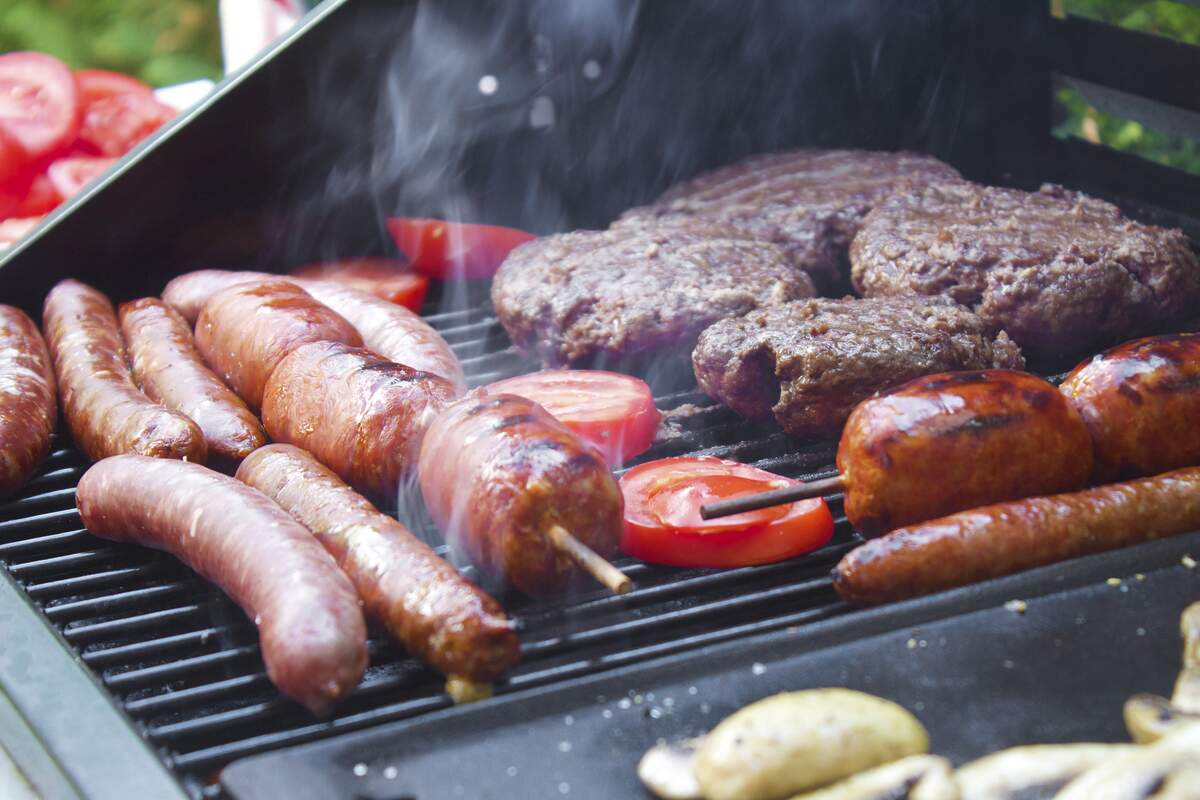
National Barbecue Day
Also known as
National BBQ Day
Observed
annually on May 16th (since 2016)
Dates
Founded by
Tags
Family & Friends
Food & Drink
Hashtags
Sources
https://en.wikipedia.org/wiki/Barbecue
https://fooddrinklife.com/national-barbecue-day-smoke-and-sauce/
https://texas-barbecue.com/national-barbecue-day-may-16-2025/
https://web.archive.org/web/20230329001621/http://www.nationalbbqday.net/
https://web.archive.org/web/20230520221337/https://www.thewickednoodle.com/national-barbecue-day/
https://www.djrickholidays.com/
https://www.anrdoezrs.net/links/100298379/type/dlg/https://www.newspapers.com/image/1010753618/
https://www.anrdoezrs.net/links/100298379/type/dlg/https://www.newspapers.com/image/564043228/
https://www.anrdoezrs.net/links/100298379/type/dlg/https://www.newspapers.com/image/607691221/
https://www.smithsonianmag.com/arts-culture/the-evolution-of-american-barbecue-13770775/
https://www.thespruceeats.com/history-of-barbecue-333603
Created by DJ Rick McNeely, founder of numerous holidays, including National Selfie Day, National Barbecue Day celebrates American barbecue culture and is marked with barbecue cookouts and food festivals. It takes place in May, during a time of year when the weather is turning warmer and more outside gatherings are held, a month that is also National Barbecue Month.
Barbecue has numerous definitions. It is a type of cooking and grilling, a type of meat and food, and an event where such food is cooked and eaten. Simply put, people barbecue to eat at a barbecue. Barbecue is most often cooked with indirect heat using smokers and fire pits, with meat being cooked long or slow, being roasted or smoked over charcoal or wood at a relatively lower heat, although direct high-heat cooking on grills is sometimes considered barbecuing.
The word "barbecue" traces back to the Taíno word barabicu, the name for a raised wooden structure used for slowly cooking and smoking meat over an open flame and used as a sleeping platform to be safe from animals looking for their own food. Spanish explorers converted the word to barbacoa, which meant a way to preserve meat by drying and slowly roasting it using small and smoky fires. The word spread north from there over the centuries; it became "barbecue" in English to describe the cooking process, and then as a name for the outdoor gatherings where the food is the centerpiece. The Europeans brought pigs and cattle to the colonies, which became the primary meat sources there. Since pigs needed little care, they became the most prominent meat source, and smokehouses and pits were built.
Barbecue is an important part of American food culture, particularly of the American South. There are different styles of barbecue, where the meat, sauce, and cooking techniques make them different. The main four types are Memphis, Kansas City, Texas, and the Carolinas. There also is St. Louis-style barbecue, which refers specifically to spare ribs and the way they are prepared in the St. Louis area.
In the Carolinas, barbecue is traditionally slow-roasted pork brushed with sauces made with ketchup and vinegar. It is divided into North and South Carolina barbecue. In North Carolina, the specialty is pork shoulder, while in South Carolina, the whole hog is used, and mustard is used in the rubs and sauces. Barbecue in the Carolinas is believed to be the first barbecue in the colonies. The vinegar prevalent in the barbecue sauce comes from the Brits' penchant for sauces that are tart. The use of mustard in South Carolina is a reflection of the immigrants there. French and German immigrants had a preference for mustard in their home countries, France being home to Dijon mustard and Germany being known for wursts being eaten with mustards. The Carolinas are well-known for their barbecue sauces: eastern North Carolina for its vinegar-based sauce, central North Carolina for its ketchup and vinegar-based sauce, and western North Carolina for its heavier ketchup-based sauce.
Carolina barbecuing techniques moved west to Texas, where they were adapted to cattle. Slow-cooked beef with dry rubs is customary in the state, and brisket is a specialty. More barbecue is eaten in Texas than anywhere else. There are four subcategories: West, Central, East, and West Texas barbecue.
In Memphis, pork is king, whether it be pork shoulder, pulled pork, pork butt, or pork ribs. It is usually cooked slowly and low, in a pit. Memphis is known for its sweet, tomato-based barbecue sauce, with tomatoes, mustard, vinegar, molasses, and brown sugar being common ingredients. The city's location as a port along the Mississippi made it easy to get ingredients like molasses. Sometimes dry rub is applied, and the pork is smoked over hickory wood, with the barbecue sauce being served on the side afterwards, as is also the custom in Kentucky.
Kansas City barbecue, the last to develop, originated in Kansas City, Missouri. Henry Perry, the father of Kansas City barbecue, settled in Kansas City and opened a barbecue restaurant in the early 1900s. Influenced by Memphis barbecue, he made sweet and spicy barbecue sauce and allowed for other meats besides pork, including beef, turkey, lamb, fish, chicken, and sausage. All of these meats are still part of Kansas City barbecue, although beef and pork are the most prominent, being slowly smoked with wood. Burnt ends are a usual part of Kansas City barbecue. Kansas City barbecue sauces are typically thick and sweet and made with tomato, molasses, and brown sugar.
American barbecue culture is celebrated today with National Barbecue Day. From the Carolinas to Texas, from Memphis to Kansas City, there are various styles of barbecue that are enjoyed while celebrating, with foods from ribs to pulled pork to brisket found on barbecue menus in restaurants, in backyards, and at festivals.
How to Observe National Barbecue Day
- Host a barbecue cookout.
- Barbecue your favorite meat or a new meat, making barbecue such as ribs, pulled pork, or brisket. Try your hand at Memphis, Carolina, Kansas City, or Texas-style barbecue. Enjoy barbecue with your favorite traditional barbecue sides, such as baked beans, barbecue beans, coleslaw, cornbread, white bread, hush puppies, biscuits, mac and cheese, collard greens, corn on the cob, pickles, potato salad, and fried okra.
- Eat at your favorite barbecue restaurant, at a barbecue restaurant near you, at one of the best barbecue restaurants in the United States, or at another notable barbecue restaurant. Look for specials being offered in honor of the day.
- Attend or make plans to attend a barbecue festival such as Bloomin' BBQ Music & Food Festival, Smokeslam, Lexington Barbecue Festival, American Royal World Series of Barbecue, Memphis in May World Championship Barbecue Cooking Contest, World's Championship Bar-B-Que Contest, Windy City Smokeout, Giant National Capital Barbecue Battle, and Texas Monthly BBQ Festival.
- Buy a new grill or smoker.
- Make your own barbecue sauce or dry rub.
- Watch a barbecue TV show such as BBQ Pitmasters, Barbecue Showdown, BBQ USA, BBQ Brawl, and Planet Barbecue.
Exclusive Content
Enjoying Checkiday? It takes a lot of support from fans like you to run a free website. For exclusive content and other perks, please consider supporting us on Patreon. Thank you!Sponsor
This event does not currently have a sponsor. If you'd like to increase visibility for this event while gaining exposure for yourself or your brand, you can learn more here.Something Wrong or Missing?
We would love to hear from you! Please contact us using this form.Observation Notifications
Would you like to be notified before the next observation? Add this event directly to your calendar with this link. You may also sign up here to be told when other notifications are available!Also on this date…


Don't miss a beat! Subscribe to any of the following feeds for daily updates.
turned_in














 notifications