


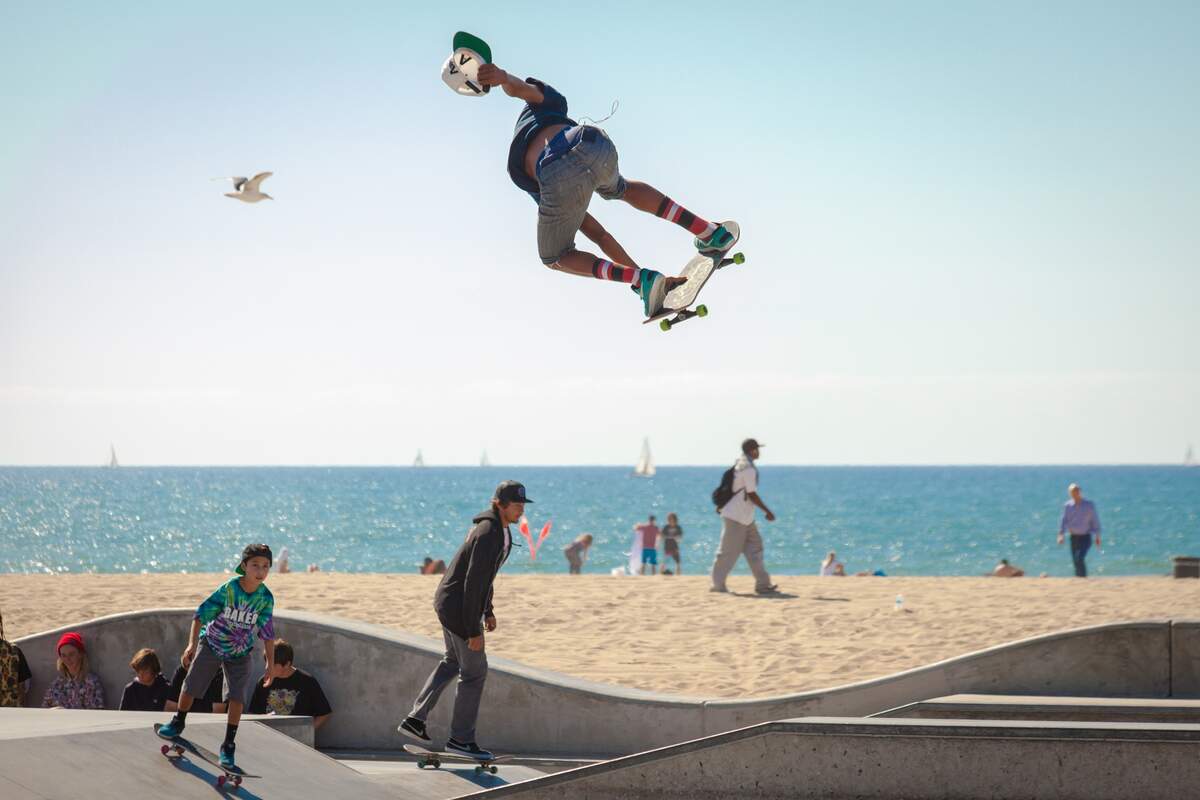
Go Skateboarding Day
Also known as
Go Skate Day
International Skate Day
Observed
annually on June 21st (since 2004)
Dates
Founded by
Don Brown in 2003
International Association of Skateboard Companies in 2003
Per Welinder in 2003
Tags
Hobbies & Activities
Hashtags
Sources
https://en.wikipedia.org/wiki/Go_Skateboarding_Day
https://en.wikipedia.org/wiki/Skateboarding
https://goskate.com/top/go-skateboarding-day/
https://web.archive.org/web/20130404162047/http://theiasc.org/go-skateboarding-day/
https://web.archive.org/web/20180219090152/http://theiasc.org/go-skateboarding-day/
https://www.globenewswire.com/news-release/2007/06/11/361140/121178/en/United-States-Government-Goes-Skateboarding.html
https://www.redbull.com/us-en/go-skateboarding-day-2021
https://www.redbull.com/us-en/history-of-skateboarding
Each year on June 21, skateboarders set everything else aside and go skateboarding. Celebrated by novices and experts alike, Go Skateboarding Day was first held in 2004 "as an excuse for skateboarders to make skateboarding their top priority." There were a few skate sessions and barbecues held that first year in Southern California, the unofficial capital of skateboarding. The day was created by the International Association of Skateboard Companies (IASC), with the idea springing from IASC Marketing Director Don Brown and Per Welinder of Birdhouse Skateboards.
An archived version of the day's official webpage provides additional information about the day:
Skateboarders everywhere will show their love and support for skateboarding by holding fundraisers, contests, protests and demos. They’ll skate across cities, gather in skateparks, stream into their local skate shop and some will even revel in the solitary act of skateboarding alone at their favorite spot, all bringing together the skateboarding community in the grind heard around the world…
…Go Skateboarding Day gives passionate skateboarders as well as those who are simply inspired by skateboarding, the opportunity to drop everything and get on a skateboard. Go Skateboarding Day is a cooperative of decentralized events that take place around the globe. Skateboard retailers, manufacturers, skateparks, distributors, organizations and individuals of all colors, creeds, and attitudes hold skateboarding events to celebrate the holiday. Skateboarders around the world create their own events and traditions to celebrate skateboarding.
Go Skateboarding Day originated as the day for skateboarders to have fun, to raise awareness about the issues we face; to show the world what skateboarding is really all about; to reclaim our culture; and to define skateboarding as the rebellious, creative celebration of independence it continues to be. In the years since that first celebration, the holiday continues to grow, but the mission remains the same: Have fun, go skateboarding!
In 2006, more than 350 events were held in 32 countries. Go Skateboarding Day was first acknowledged by the U.S. government when it received Congressional recognition in 2007, with support from Representative Loretta Sanchez (D-CA). Today, Go Skateboarding Day continues to be celebrated by thousands of skaters in cities around the world. Events are organized by skate companies, skate shops, and skateparks, with the latter often being the location of barbecues, skate contests, and skate meetups.
Skateboarding can be a recreational activity, a mode of transportation, an action sport where tricks are performed, and much more. Today it is a huge industry, but it wasn't always that way. The forerunners of skateboards were crates of wood with roller derby skates and handlebars attached to them. Over time, wooden planks replaced the boxes, and the handlebars were done away with too, with the movement of skating then being akin to surfing. The boxes may date to the late 1800s, but it wasn't until the early 1950s in Southern California when skateboards with wooden pallets with clay wheels hit the streets.
Until commercial skateboards hit the market in 1959, skateboards were homemade. A streak of this do-it-yourself and individualist ethos has remained in skateboarding since. The first skateboarders were surfers who rode the sidewalks when the waves were too flat to ride, and in the early 1960s, skateboarding was advertised as "sidewalk surfing." Hobie and Makaha were two of the early companies to produce skateboards. They were surf manufacturers who started making skateboards that looked like small surfboards.
In 1963, Makaha formed the first professional skateboarding team, and the first skateboarding competition took place later that year in Hermosa, California. Patti McGee became a popular skateboarder of the era, and even appeared on the cover of Life magazine in 1965 and on television programs like What's My Line? and The Tonight Show Starring Johnny Carson, helping to increase the sport's visibility. But by the mid-1960s, skateboarding's popularity had stalled. At the time, the focus was more on competitions, and the media portrayed the sport as dangerous. Consequently, shops were reluctant to sell skateboards, and parents were reluctant to buy them.
Frank Nasworthy introduced the polyurethane wheel to skateboarding in the early 1970s, replacing clay wheels. Called Cadillac Wheels, they provided better grip on asphalt. The kicktail was introduced around the same time, with the back end of the skateboard being raised upward. By the mid-1970s, there was a skateboard craze worldwide. Public skateparks started popping up in North and South America, and then in Europe and Asia. The first two large skateparks to open to the public were Skateboard City skatepark in Port Orange, Florida, and Carlsbad Skatepark in San Diego County, California, in March 1976.
In 1975, about 500 competitors participated in the Del Mar National Championships. A new style of progressive skateboarding, based on the style of Hawaiian surfers, came from the Zephyr team. They became known as the Z-Boys and became one of the most influential skateboarding teams ever. Skateboarding contests for cash and prizes were developed and held throughout California. Vert skateboarding gained in popularity. But because of liability costs, several skateparks closed, and fewer were being built, and as the decade closed out, skateboarding went more underground. In the early 1980s, it became part of anti-establishment underground culture and was also closely tied to the punk scene.
In the late 1970s, Alan Gelfand came up with the non-hands aerial, which became known as the ollie. A few years later, Rodney Mullen came up with a number of flip tricks, including the kickflip. Natas Kaupas and Mark Gonzales broke ground as street skateboarders. There were few public skateparks in the late 1980s, so street skaters skated at shopping centers and on other private and public property. Street skateboarding continued to be an important part of skateboarding culture in the 1990s. Since the mid-1990s, most skateboards have been symmetrical with a relatively narrow width. Based on freestyle boards of the 1980s, these standard-sized boards are about 7.25 to 8 inches wide and 30 to 32 inches long.
Skateboarding came back into the mainstream at the turn of the twenty-first century. An important event that launched it on this path was when Tony Hawk landed the first "900" trick—a 900 degree aerial spin, or 2.5 spins on the board—at the X Games in San Francisco in 1999. Shortly after, the first Tony Hawk's Pro Skater video game was released. By 2006, there were over 2,400 skateparks. X Games and Street League became hugely successful. Skateboarding first became part of the Olympics at the 2020 Summer Olympics, held in 2021 because of the COVID-19 pandemic. As the twenty-first century continues, skateboarding remains a vibrant recreational activity, action sport, and way of life, and it is celebrated today with Go Skateboarding Day.
How to Observe Go Skateboarding Day
- Go skateboarding! Skate with friends or skate alone. Go to a skatepark or do some freestyle, vert, or street skating. Make sure to try out some tricks you haven't done before!
- Check for Go Skateboarding Day events taking place in your community. Check with skateparks, skate shops, and skate companies. Perhaps that are barbecues, skate contests, and skate meetups taking place near you. You could also organize your own event.
If you need a break from skateboarding, there are other ways you could celebrate:
- Play some skateboarding video games such as Skate or one of the Tony Hawk's Pro Skater games.
- Visit the Skateboarding Hall of Fame and Museum or explore their website.
- Watch a feature film or documentary that focuses on skateboarding such as Dogtown and Z-Boys, Lords of Dogtown, and Thrashin'.
- Watch some skate videos.
- Learn about important skateboarders by reading articles such as "11 professional skateboarders you need to know about," "30 Most Influential Skateboarders of All Time," and "The most influential skateboarders of all time."
- Follow the Go Skateboarding Day Facebook page.
Exclusive Content
Enjoying Checkiday? It takes a lot of support from fans like you to run a free website. For exclusive content and other perks, please consider supporting us on Patreon. Thank you!Sponsor
This event does not currently have a sponsor. If you'd like to increase visibility for this event while gaining exposure for yourself or your brand, you can learn more here.Something Wrong or Missing?
We would love to hear from you! Please contact us using this form.Observation Notifications
Would you like to be notified before the next observation? Add this event directly to your calendar with this link. You may also sign up here to be told when other notifications are available!Also on this date…


Don't miss a beat! Subscribe to any of the following feeds for daily updates.
turned_in












 notifications