


National King Cake Day
Also known as
All Kings Day
Observed
annually on January 6th
Dates
Tags
Food & Drink
Snacks & Desserts
Hashtags
Sources
https://en.wikipedia.org/wiki/King_cake
https://glovergardens.com/12th-night-king-cakes-and-a-learning-experience/
https://www.facebook.com/AlexandersHighlandMarket/posts/happy-feast-of-the-epiphany-today-also-known-as-kings-day-celebrates-the-three-w/1442181777917691/
https://www.facebook.com/pensacolamardigras/posts/let-them-eat-cake-king-cake-that-is-faith-folklore-and-a-lot-of-purple-green-and/1306190154876567/
https://www.neworleans.com/events/holidays-seasonal/mardi-gras/king-cakes/
https://www.southernliving.com/holidays-occasions/mardi-gras/king-cake-meaning
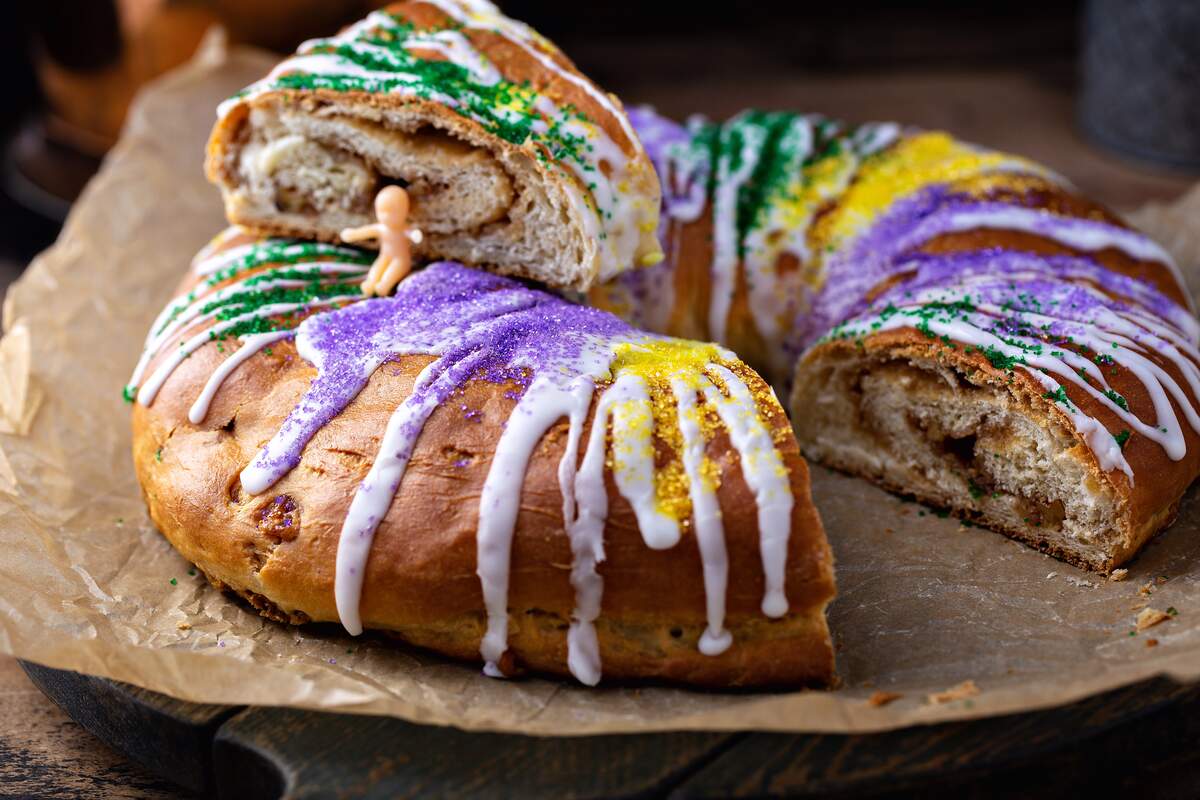
National King Cake Day marks the start of the Mardi Gras or Carnival season, with king cake becoming available in stores then, particularly in locations like New Orleans. National King Cake Day is closely connected with Epiphany, also called Three Kings Day and All Kings Day, which takes place on the same date. King cake is eaten today to start the Carnival season, and in the days that follow until Fat Tuesday, or Mardi Gras.
The name "king cake" is a reference to the Three Wise Men in the Bible. They brought gifts to baby Jesus on the Twelfth Night, the evening before Epiphany. For this reason, king cake can also be eaten to celebrate their coming and to honor them. The cake is also known as Three Kings Cake or baby cake.
King cake is typically made of brioche dough, with a number of fillings such as cinnamon, cream cheese, fruit, and chocolate. It is usually like a blend of coffee cake and cinnamon roll. Its glaze, icing, and sprinkles are gold, purple, and green, the colors of Mardi Gras. Gold represents power, purple represents justice, and green represents faith.
References to king cake in North America date to the late seventeenth century in Nova Scotia. On the eve of Three Kings Day in 1649, "a round cake made with a quarter bushel of the finest white wheat flour, kneaded with six eggs and half a pound of the freshest butter, with a black bean placed in the cake’s edge" was to be delivered. The tradition of the Mardi Gras king cake wasn't established until the twentieth century, although its colors date to 1872.
A baby figurine is usually buried in the cake. The most prevailing theory is that it symbolizes baby Jesus. Another theory suggests its connection to king's balls in colonial Louisiana, when a bean, ring, or trinket was placed in the cake. If an attendee received a slice with it in it, they were crowned king of the ball in the lead-up to Mardi Gras. Babies became the norm in king cakes in the 1940s, when baker Donald Entringer began putting porcelain babies into them. Plastic babies soon became more available and replaced them. Many bakeries now place it in the center ring of the cake instead of inside it, with the purchaser being tasked with putting it in the cake before serving. Finding the plastic baby is now a symbol of good luck. While the finder might receive good luck, it also becomes their responsibility to play host or provide the king cake for the next party.
How to Observe National King Cake Day
- Make a king cake.
- Pick up a king cake from a bakery near you.
- Plan a visit to New Orleans during Carnival season.
- Pick up a king cake from a bakery in New Orleans or from King Cake Hub.
- Read The Big Book of King Cake and pick up The Little Book of King Cake for a little one.
Exclusive Content
Enjoying Checkiday? It takes a lot of support from fans like you to run a free website. For exclusive content and other perks, please consider supporting us on Patreon. Thank you!Sponsor
This event does not currently have a sponsor. If you'd like to increase visibility for this event while gaining exposure for yourself or your brand, you can learn more here.Something Wrong or Missing?
We would love to hear from you! Please contact us using this form.Observation Notifications
Would you like to be notified before the next observation? Add this event directly to your calendar with this link. You may also sign up here to be told when other notifications are available!Also on this date…

Don't miss a beat! Subscribe to any of the following feeds for daily updates.
turned_in














 notifications