


National White Chocolate Day
Observed
annually on September 22nd (since 2004)
Dates
September 22nd, 2024
September 22nd, 2025
September 22nd, 2026
September 22nd, 2027
September 22nd, 2028
Tags
Food & Drink
Snacks & Desserts
Hashtags
Sources
https://en.wikipedia.org/wiki/White_chocolate
https://wocorlando.com/uncategorized/history-of-white-chocolate/
https://www.cdkitchen.com/recipes/articles/view/239/1/National-White-Chocolate-Day.html
https://www.punchbowl.com/holidays/national-white-chocolate-day
https://www.scmp.com/magazines/style/news-trends/article/3036673/how-white-chocolate-evolved-coating-kids-medicine-sweet
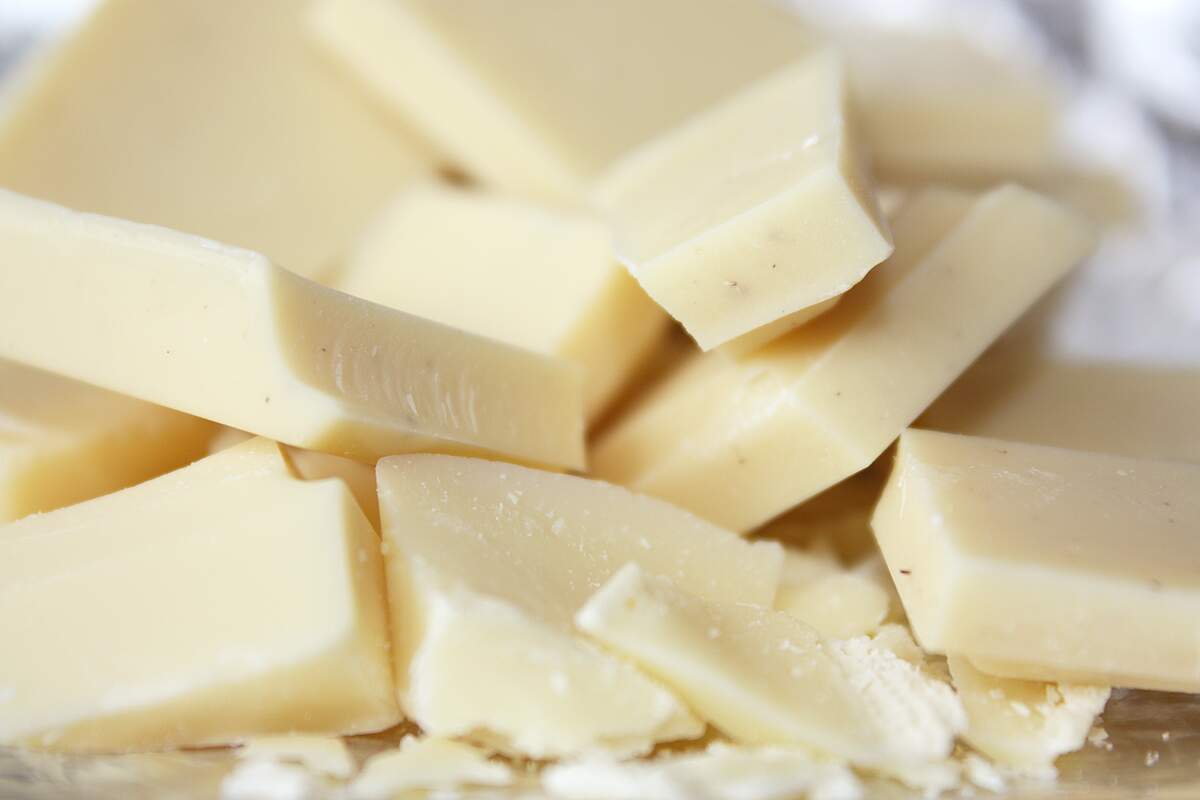
White chocolate is enjoyed today on National White Chocolate Day! White chocolate is mainly made with cocoa butter, sugar, and milk solids. Salt is often added, and vanilla sometimes is too, which makes it sweeter and creamier. When white chocolate is being made, the solids of the cocoa beans—which are dark in color and present in milk chocolate and dark chocolate—are removed from the fat content (the cocoa butter). White chocolate is more of an ivory or cream color than it is white. It is used in similar ways as milk chocolate and dark chocolate, such as in candy and baking. There are white chocolate bars and chocolate chips, and it is used to make icings, creams, fillings, ganache, mousse, pralines, and more.
Henri Nestlé is regularly credited with inventing white chocolate. In the 1930s, white chocolate was used to coat Nestrovit, a vitamin supplement that the Nestlé company collaborated with the pharmaceutical group Roche to create. Using this as a template, Nestlé started commercial production of white chocolate in 1936, selling bars that were known as Milkybar in the United Kingdom and Galak in Europe. Because it didn't have the caffeine and stronger flavors that dark chocolate and milk chocolate had, white chocolate became associated with children in Europe. But by the end of the twentieth century, it was viewed more as a luxury item for adults. For example, in Belgium it was used to make large white chocolate pralines that were flavored with orange peel.
The first time that white chocolate was distributed nationally in the United States wasn't until 1984, when Nestlé debuted the Alpine White Bar. This white chocolate candy bar with almonds helped propel the popularity of white chocolate in the United States, as did white chocolate macadamia cookies made by Mrs. Fields. White chocolate lost some of its allure in the United States by the mid-1990s, and the Alpine White Bar was discontinued in 1993. Still, other white chocolate bars were introduced, such as the Hershey's Cookies 'n' Creme bar and Nestlé's Crunch White bar.
Around the turn of the century, a lot of sweets were labeled white chocolate that didn't contain cocoa butter and were otherwise low in quality. On the other end, not everyone considered white chocolate to be real chocolate simply because it wasn't milk chocolate or dark chocolate—because it didn't contain cocoa solids. The Chocolate Manufacturers Association and Hershey began lobbying for a standard of identity for white chocolate. In 2002, the FDA established a standard of identity, and it became effective in 2004. To be considered chocolate in the United States, it must contain at least 20% cocoa butter, at least 14% total milk solids, at least 3.5% milk fat, and no more than 55% sugar. Internationally, what is considered white chocolate is stipulated by the standards in the Codex Alimentarius. In the European Union, the composition of white chocolate is governed by the European Cocoa and Chocolate Directive.
How to Observe National White Chocolate Day
Eat some white chocolate! Have a white chocolate candy bar like a Hershey's Cookies 'n' Creme bar or a Nestlé's Crunch White bar. Pick up some freshly made white chocolate from a local confectionary. Have some Mrs. Fields white chocolate macadamia cookies or make your own. You could also make another dessert that involves white chocolate.
Exclusive Content
Enjoying Checkiday? It takes a lot of support from fans like you to run a free website. For exclusive content and other perks, please consider supporting us on Patreon. Thank you!Sponsor
This event does not currently have a sponsor. If you'd like to increase visibility for this event while gaining exposure for yourself or your brand, you can learn more here.Something Wrong or Missing?
We would love to hear from you! Please contact us using this form.Observation Notifications
Would you like to be notified before the next observation? Add this event directly to your calendar with this link. You may also sign up here to be told when other notifications are available!Also on this date…



Don't miss a beat! Subscribe to any of the following feeds for daily updates.
turned_in














 notifications