

National Haunted House Day
Observed
the second Friday in October (since 2013)
Dates
Founded by
Tags
Hobbies & Activities
Travel & Tourism
Hashtags
Sources
https://303magazine.com/2017/10/best-haunted-house-denver/
https://en.wikipedia.org/wiki/Haunted_attraction_(simulated)
https://www.confluence-denver.com/features/screamworks_101613.aspx
https://www.history.com/news/halloween-haunted-house-great-depression
https://www.nationalhauntedhouseday.org/
https://www.nbcnews.com/business/travel/haunted-houses-offer-new-twists-old-fears-flna8c11379011
https://www.smithsonianmag.com/history/history-haunted-house-180957008/
For many, going to a haunted house is an annual part of the fall season. Haunted houses have helped expand the celebration of Halloween and horror from one day to a whole season. But one day has been chosen as National Haunted House Day: the second Friday in October. National Haunted House Day was created by award-winning haunted house designers Chris Stafford and Warren Conard and is supported by artists, business owners, community leaders, and charitable leaders. Early on, the organizers of the day petitioned the government with an attempt to get federal recognition for it. Haunted houses and attractions are celebrated and visited on National Haunted House Day, and it's also a day when these locations participate by donating portions of their proceeds to charities and nonprofits.
Haunted houses and attractions simulate the visiting of real haunted locations and experiencing horror scenarios. They feature entertainment centered around Halloween, horror, or a combo of the two. They feature demons, ghosts, skeletons, zombies, monsters, serial killers, slashers, possessed people, witches, and other frightful characters. To intensify the experience, haunted houses and attractions may be equipped with animatronics, black lights, strobe lights, fog machines, spinning tunnels, air blasters, decorations, scary music and sounds, and gory scenes of horror, murder, torment, and terror, often with fake blood. Actors in costumes, masks, and prosthetics may lurk, follow, and spring out unsuspectingly.
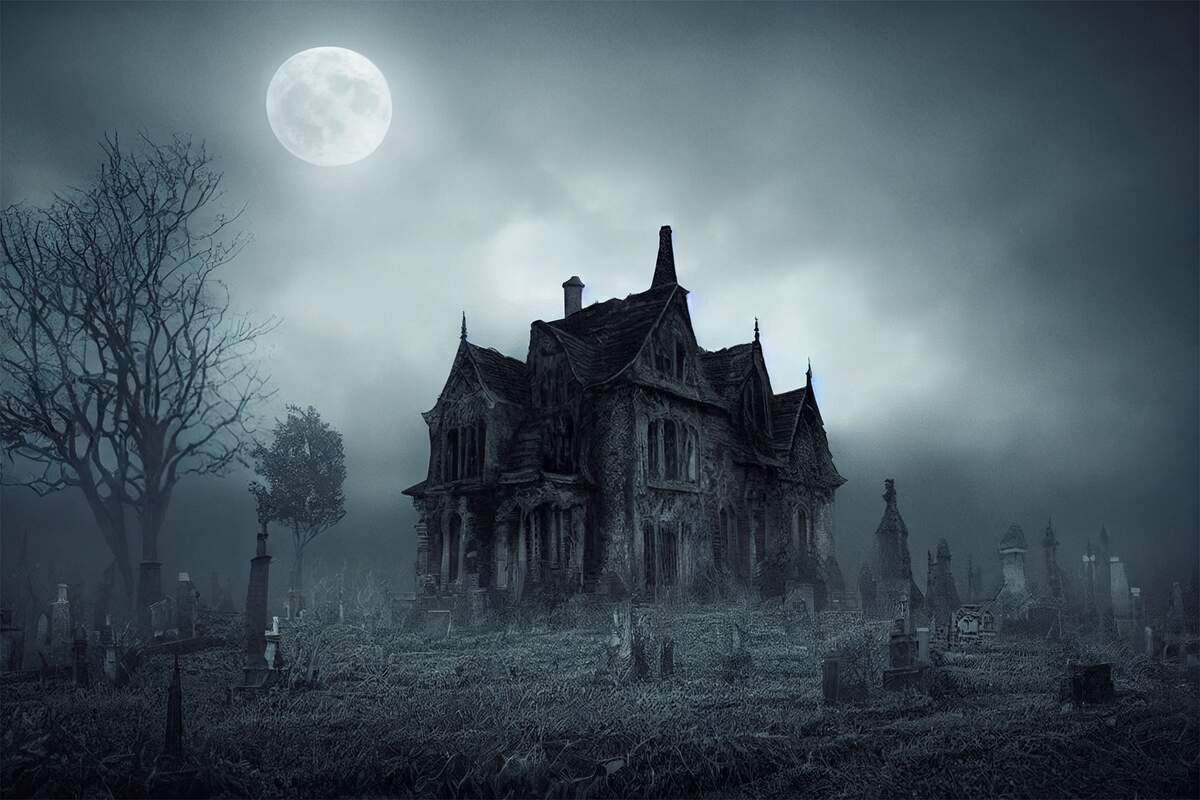
Haunted houses may be temporary structures built for the season, or may be abandoned or dilapidated houses or mansions. Haunted houses or attractions may be in abandoned or operating amusement and theme parks, shopping malls, prisons, asylums, ships, barns, and warehouses. Haunted attractions may be in cornfields and corn mazes, hedge mazes, farms (along with haunted hayrides), parks, trails, forests, and wooded areas. Haunted houses and attractions usually open in mid to late September and run through October or the first week of November.
The precursors to haunted houses date to nineteenth-century London, where gruesome illusions and attractions were shown. Marie Tussaud's exhibition of wax sculptures and decapitated figures of the French Revolution—like Marie Antionette, King Louis XVI, and Robespierre—which she called a "Chamber of Horrors," opened in 1802 and is still viewable today. At the turn of the twentieth century, the stage at the Grand Guignol was showing graphic dismemberment meant to shock audiences. In 1915, the Orton and Spooner Ghost House, one of the first "ghost houses," opened at an English fairground in Liphook. Powered by steam and similar to a carnival fun house, it had shaking floors, dimming lights, and screams.
Haunted houses with Halloween themes first appeared during the Great Depression, at a time when Halloween pranks like vandalism, damage, and harassment of strangers—exemplified by flipping cars and sawing off telephone poles—were on the rise with young people. Along with trick-or-treating, which also debuted around this time, haunted houses helped rein in the young people who took part in such Halloween destruction. Some cities had contemplated banning Halloween, but in a number of communities, the move was made to organize activities like trick-or-treating, costume parades, and haunted houses. The first haunted houses of this era were in homes. People decorated their basements and held "house-to-house" parties or organized "trails of terror."
The beginnings of haunted houses outside of private homes came in the following decades. In California, the San Mateo Haunted House opened in 1957, followed by the San Bernardino Assistance League Haunted House in 1958. The Children's Museum Haunted House in Indianapolis, open since 1964, is the country's longest-running haunted house. The real beginning of the haunted attraction industry, when the haunted house became a cultural icon, occurred when Disneyland's Haunted Mansion opened in August 1969. Over 80,000 people were visiting it a day shortly after its opening. It was known for using new technologies and effects, and had a Grand Hall with ghouls at a dancing birthday party. Haunted houses spread across the United States in the years that followed. In response to the budding popularity of haunted houses, some Christian groups came up with the concept of hell houses, designed to show attendees the perils of hell. Jerry Falwell introduced one of the first in 1972.
Songs like "Monster Mash" by Bobby Pickett, released in 1962, and Michael Jackson's "Thriller" music video from 1982 set the groundwork for a broader celebration of Halloween and the rise of haunted houses. The haunted house industry also gained steam because of the popularity of horror and slasher movies like Halloween, A Nightmare on Elm Street, and Friday the 13th. Characters from these films were prominent in haunted houses in the 1980s and '90s.
The United States Junior Chamber, known as the Jaycees, raised a lot of money for charities by putting on haunted houses in abandoned buildings and fields. The Jaycees became the best-known organizer of haunted houses. The March of Dimes also ran some haunted houses.
But when the Haunted Castle at Six Flags Great Adventure in New Jersey caught fire in 1984 and eight teenagers died after being trapped, haunted houses were closed and inspected, and stronger safety regulations were enacted across the United States. The result was the rise of more permanent, larger venues run by for-profit entities, and the decline of temporary, non-profit haunted houses run by volunteers and charities like the Jaycees. Although many Jaycees haunted houses are still in operation today.
Knott's Berry Farm in California started hosting Knott's Scary Farm, their annual event around Halloween, in 1973. More theme parks got into the haunted house business in the 1980s and '90s as a way to boost attendance to their parks in the off-season. Six Flags Fright Fest opened as Fright Nights in 1986. Universal Studios started Halloween Horror Nights in 1991. The popularity of Knott's Scary Farm increased following the opening of other haunted house theme parks.
Extreme haunted houses are also not uncommon today. These haunted houses may have survival elements, require a signed waiver, contain mild torture, have escape rooms, and may or may not have a safe word. McKamey Manor is one example of an extreme haunted house. All types of haunted houses and attractions are celebrated and visited today, on National Haunted House Day, and those behind them donate a portion of the day's proceeds to charities and nonprofits.
How to Observe National Haunted House Day
- Visit a haunted house or haunted attraction. Perhaps you can make it to one of the best in the nation.
- If you run a haunted attraction, donate some of your profits to a charity or nonprofit today. If you don't have a charity in mind, consider donating to Don't Be a Monster, the anti-bullying nonprofit started by the founders of National Haunted House Day.
- Make your own haunted house.
- Visit a real haunted house.
- Check out the day's official website and Facebook page.
- Watch a film about haunted houses such as Monster Inside: America's Most Extreme Haunted House, Hell House, or Nothing But Haunts: The Story Behind the Scare.
- Learn more about the Haunted Attraction Association.
- Read issues of Hauntworld Magazine, Haunted Attraction Magazine, or Fangoria.
- Make plans to attend an upcoming haunted house convention.
Exclusive Content
Enjoying Checkiday? It takes a lot of support from fans like you to run a free website. For exclusive content and other perks, please consider supporting us on Patreon. Thank you!Sponsor
This event does not currently have a sponsor. If you'd like to increase visibility for this event while gaining exposure for yourself or your brand, you can learn more here.Something Wrong or Missing?
We would love to hear from you! Please contact us using this form.Observation Notifications
Would you like to be notified before the next observation? Add this event directly to your calendar with this link. You may also sign up here to be told when other notifications are available!Also on this date…

Don't miss a beat! Subscribe to any of the following feeds for daily updates.
turned_in











 notifications