


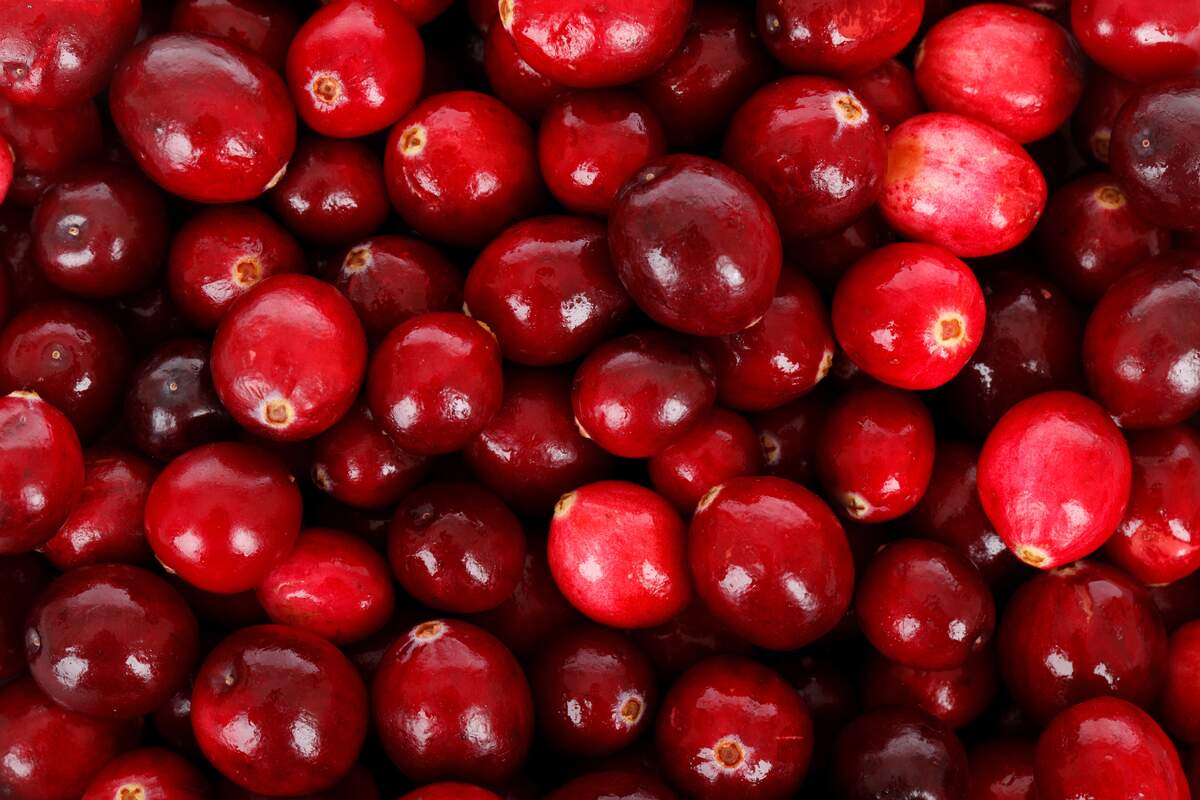
National Cranberry Day
Observed
annually on November 21st (since 2014)
Dates
Tags
Food & Drink
Fruits & Vegetables
Hashtags
Sources
https://blog.thenibble.com/2016/11/19/tip-of-the-day-honor-the-cranberry/
https://chasinfoods.com/celebrate-national-cranberry-day-with-these-delicious-cranberry-recipes/
https://en.wikipedia.org/wiki/Cranberry
https://web.archive.org/web/20151202091809/https://foodimentary.com/2011/11/21/november-21-todays-food-history/
https://www.cranberryinstitute.org/about-cranberries
https://www.healthline.com/nutrition/foods/cranberries
https://www.anrdoezrs.net/links/100298379/type/dlg/https://www.newspapers.com/image/612395950/
Taking place the day before National Cranberry Relish Day and two days before Eat a Cranberry Day, National Cranberry Day takes place today and celebrates cranberries! Cranberries are a member of the heather family along with other berries such as blueberries, lingonberries, and bilberries. Cranberry plants are low, creeping evergreen dwarf shrubs with trailing vines. They are native to North America and have traditionally grown in acidic bogs in cooler regions of the United States and Canada. In 2024, 65% of the world's cranberry production took place in the United States, while Canada accounted for 34%, the countries together making up 99% of production. Wisconsin was the largest state producer, with 59% of production, followed by Massachusetts, New Jersey, Oregon, and Washington. Quebec is the largest producing Canadian province, with 60% of production, followed by British Columbia with 33%.
By the time of the arrival of the Pilgrims, the Wampanoag of southeastern Massachusetts had been harvesting wild cranberries for thousands of years. Other Native tribes ate them as well, using them to make grits, pemmican with deer meat, mashed cranberries and fat, pressed and dried cranberries, and bread by mashing cranberries with cornmeal. The Wampanoag taught the Pilgrims how to use cranberries not only for food, but for dyes and medicine: as a fever reducer and seasickness remedy, and for making wound poultices. Pilgrims may have been the first to make cranberry juice in 1683.
The name "cranberry" comes from the German word kranebere, meaning "crane berry," given to the plant by Dutch and German settlers to New England who thought the flower stem, calyx, and petals resembled the neck, head, and bill of the sandhill crane. Cranberries are also called "bounceberries" because they bounce when ripe. They can also float, and can do both because they contain air pockets. They were first cultivated on Cape Cod in Dennis by Captain Henry Hall, a Revolutionary War veteran, around 1816. Cranberries soon began being cultivated in wetlands, peat bogs, and swamps. Early cultivated cranberries were sold to whalers and sailors, who stored them in water barrels and used them to fight scurvy. Cranberries made their way to the Pacific Northwest and were first shipped to Europe in the 1820s, to England, and from there to Russia, Scotland, and Scandinavia.
Wet (or water) harvesting, a labor-saving process, was developed in the 1960s. Now the most common form of harvesting, it was historically done in wetlands, like bogs, but is now often done in constructed beds. When it is time to harvest, the beds are flooded to about 6 to 8 inches above the vines, and the cranberries are then beaten off the vine with a harvester. The berries are gathered together, often being corralled into a corner, then loaded on trucks and brought to a receiving station. Most wet harvested cranberries are used to make processed cranberry products like juice and sauce. Dry harvested cranberries are combed from the vines with a mechanized picking machine, and are cleaned and packaged as fresh fruit—about 5 to 10% of the crop in the United States is dry harvested, which produces a less bruised fruit that doesn't need to be processed immediately. Most cranberries are harvested between September and October or early November, usually after the first frost, when they have turned a deep red, meaning they are ripe.
Cranberries are tart, sour, and sharp, and thus rarely eaten raw. They are eaten dried (usually sweetened), as a sauce, as jam, as relish, and as juice. They are used in baking, being included in scones, muffins, bread, and cake, often being combined with orange and orange zest. Cranberries are most often consumed in juice form, often with sugar added and blended with other fruit juice to reduce tartness. They are also used in cocktails, such as the cosmopolitan. Cranberries likely were part of the first Thanksgiving meal in 1621. In 1917, cranberry grower Elizabeth Lee began making and selling "Bog Sweet Cranberry Sauce." Along with Marcus Urann and two others, she started a company that became Ocean Spray, the largest cranberry growers association in the United States. Ocean Spray made the jellied cranberry sauce "log" available nationwide in 1941, and it became a food staple at Thanksgiving and Christmas.
Cranberries are made up mainly of carbohydrates and fiber. They are a rich source of vitamin C, and also have manganese, copper, vitamin E, and vitamin K1. They are high in quercetin and other polyphenols, including A-type proanthocyanidins, which may be effective in helping prevent urinary tract infections (UTIs). Cranberries are heart-healthy, improving cholesterol and lowering blood pressure, and may help prevent stomach cancer. So cranberries are not only worth celebrating today because of the depth they bring to recipes, but because of the health benefits they provide.
How to Observe National Cranberry Day
- Eat a raw cranberry.
- Enjoy some cranberry juice, cranberry sauce, cranberry jam, or dried cranberries.
- Make homemade cranberry relish to have on hand for tomorrow, National Cranberry Relish Day.
- Mix up a cranberry cocktail such as a Cape Codder, Sea Breeze, Cosmopolitan, or Crantini.
- Plan a trip to Wisconsin to visit a cranberry marsh or attend a cranberry festival.
Exclusive Content
Enjoying Checkiday? It takes a lot of support from fans like you to run a free website. For exclusive content and other perks, please consider supporting us on Patreon. Thank you!Sponsor
This event does not currently have a sponsor. If you'd like to increase visibility for this event while gaining exposure for yourself or your brand, you can learn more here.Something Wrong or Missing?
We would love to hear from you! Please contact us using this form.Observation Notifications
Would you like to be notified before the next observation? Add this event directly to your calendar with this link. You may also sign up here to be told when other notifications are available!Also on this date…


Don't miss a beat! Subscribe to any of the following feeds for daily updates.
turned_in














 notifications