


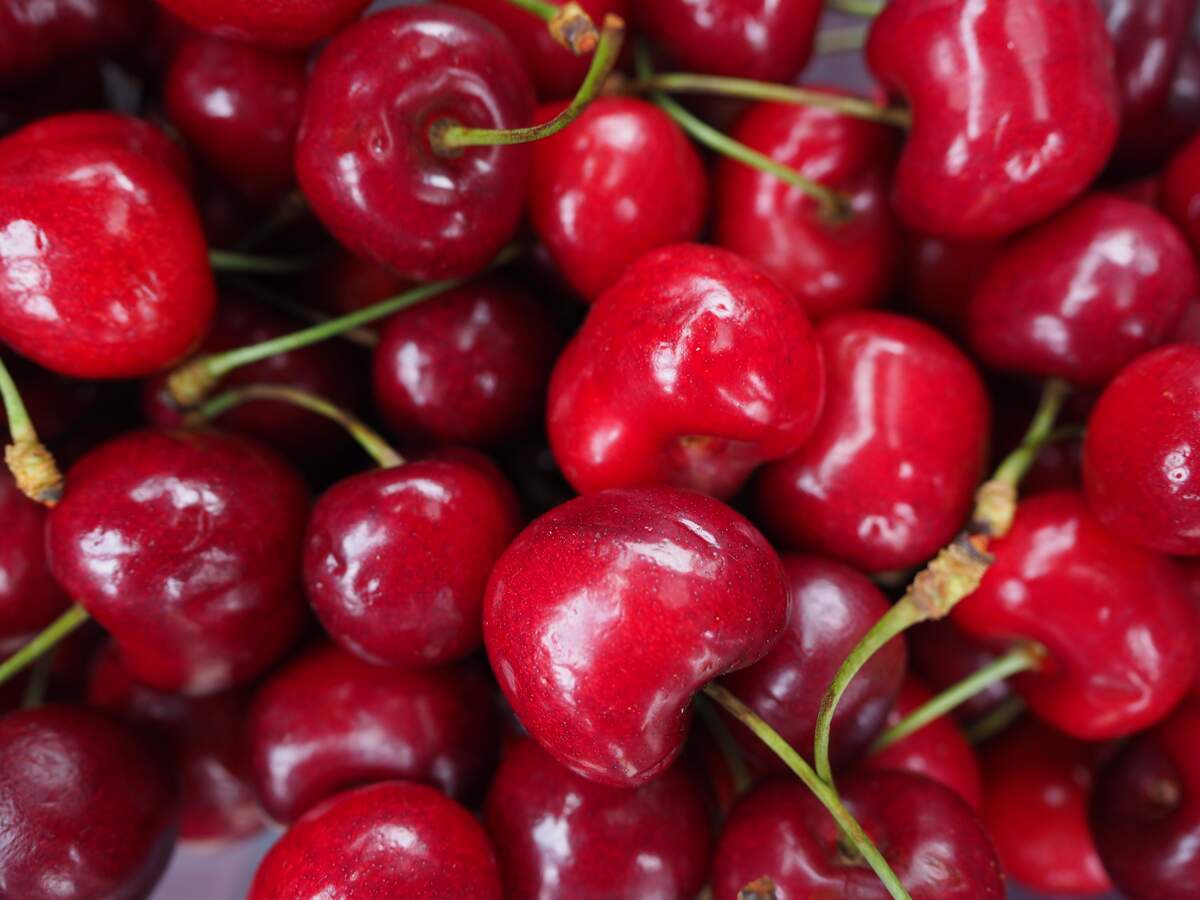
National Cherry Day
Observed
Dates
Founded by
Henrietta Green in 2008
Tags
Food & Drink
Fruits & Vegetables
Hashtags
Sources
https://anydayguide.com/calendar/4634
https://web-holidays.com/blog/national-cherry-day
https://www.britannica.com/plant/cherry
https://www.eduvast.com/lifestyle/food/national-cherry-day/
https://www.gov.uk/government/news/pip-pip-hooray-its-national-cherry-day
https://www.anrdoezrs.net/links/100298379/type/dlg/https://www.newspapers.com/image/1079657801/
https://www.anrdoezrs.net/links/100298379/type/dlg/https://www.newspapers.com/image/710129231/
https://www.anrdoezrs.net/links/100298379/type/dlg/https://www.newspapers.com/image/723362986/
https://www.anrdoezrs.net/links/100298379/type/dlg/https://www.newspapers.com/image/753718050/
https://www.tasteofhome.com/article/10-absolutely-delightful-facts-about-cherries/
National Cherry Day originated in England in 2008 in an effort to revitalize the nation's diminishing cherry orchards. England and Wales had lost more than half—and perhaps as much as 90 percent—of their cherry orchards since the beginning of the twentieth century. This not only meant cherries were hard to come by and had to be imported, but it also had deleterious effects on wildlife, particularly on insects. British food writer Henrietta Green created National Cherry Day as part of CherryAid, a campaign to raise awareness about the need to restore and maintain cherry orchards in England. It was originally observed on July 19, switched to July 18 in the second year, and is now held on July 16. Over time, it also changed from being a holiday to raise awareness in England to a day to celebrate cherries worldwide.
Cherries are native to parts of eastern Europe and Western Asia, and were brought to the Americas in the seventeenth century. The roots of American cherry production go back to 1852, when Peter Dougherty planted cherry trees in the Old Mission Peninsula in Michigan, just north of Traverse City. The climate of the Midwest was and is ideal for growing cherries, and in 1893, the first commercial sour cherry orchards were established in Michigan, also at Old Mission Peninsula. The Traverse City Canning Company was built and became the first cherry processing facility in the United States.
Maraschino cherries helped popularize cherries in the United States. They were exported to the country in the 1890s from northern Italy and the Balkan Peninsula. These maraschino cherries were made with liqueur and Marasca cherries. In 1896, sweet cherries from the United States started being used to make maraschino cherries. Liqueur was eliminated, and the cherries were soaked in sugar syrup and dyed. There are also green mint maraschino cherries.
There are sweet cherries and sour cherries, also known as tart cherries. There are also the less-cultivated duke cherries, a cross between the two. Cherries range in color from red to black or deep purple to yellow. They are available raw, canned, dried, or frozen. The most common variety of sweet cherries is Bing cherries, developed in Oregon, with other common ones being Lambert and Rainier. Sweet cherries are usually eaten raw, but they may also be cooked. The most common sour cherries are Montmorency cherries. Sour cherries are almost always frozen or canned. They are cooked and used in sauces and fillings to make pies, pastries, and other baked goods.
In the United States, sweet cherries are most grown in California, Oregon, and Washington, while sour cherries are most often found in Michigan and Wisconsin. Michigan is the top cherry-producing state and is particularly known for its sour cherries. Turkey is the top cherry-producing country. Besides the United States, some of the other top cherry-producing countries are Chile and Iran. Cherries are generally available from May through August, being at their peak in July. They are used to make many types of foods, some of the most common examples being cheesecake, cobbler, pie, popovers, tart, and turnovers. There is cherry wine, cherry-flavored soda, cherry ice cream, and chocolate-covered cherries.
Not all cherry trees are bred for their fruit. Many in Japan are grown for their beautiful white and pink flowers. In 1912, Japan gifted the United States cherry trees. They are located at the Tidal Basin on the National Mall and bloom in early spring. Some cherry trees are also used for their wood. Cherry tree wood, like that from black cherry trees, is a dark red wood that is used to make furniture.
How to Observe National Cherry Day
- Visit a pick-your-own-cherries orchard. They can be found in states like Michigan, Wisconsin, California, Oregon, and Washington.
- Buy some cherries at a farmers' market.
- Plant or care for a cherry tree or trees.
- Make plans to attend the next National Cherry Festival in Traverse City, Michigan, the National Cherry Blossom Festival in Washington, D.C., or another cherry festival.
- Make plans to see the cherry blossoms in Washington, D.C. or cherry blossoms at another location in the United States.
- Visit Traverse City, Michigan, Door County, Wisconsin, Yakima Valley, Washington, Willamette Valley, Oregon, or another area known for producing cherries.
- Make a recipe with cherries such as:
- Enjoy cherry ice cream, maraschino cherries, chocolate-covered cherries, cherry soda, cherry wine, and other foods and drinks made with cherries.
Exclusive Content
Enjoying Checkiday? It takes a lot of support from fans like you to run a free website. For exclusive content and other perks, please consider supporting us on Patreon. Thank you!Sponsor
This event does not currently have a sponsor. If you'd like to increase visibility for this event while gaining exposure for yourself or your brand, you can learn more here.Something Wrong or Missing?
We would love to hear from you! Please contact us using this form.Observation Notifications
Would you like to be notified before the next observation? Add this event directly to your calendar with this link. You may also sign up here to be told when other notifications are available!Also on this date…



Don't miss a beat! Subscribe to any of the following feeds for daily updates.
turned_in














 notifications