

White House Easter Egg Roll
Observed
Dates
Tags
Federal & Official
Food & Drink
Fun & Games
Weird & Obscure
Hashtags
Sources
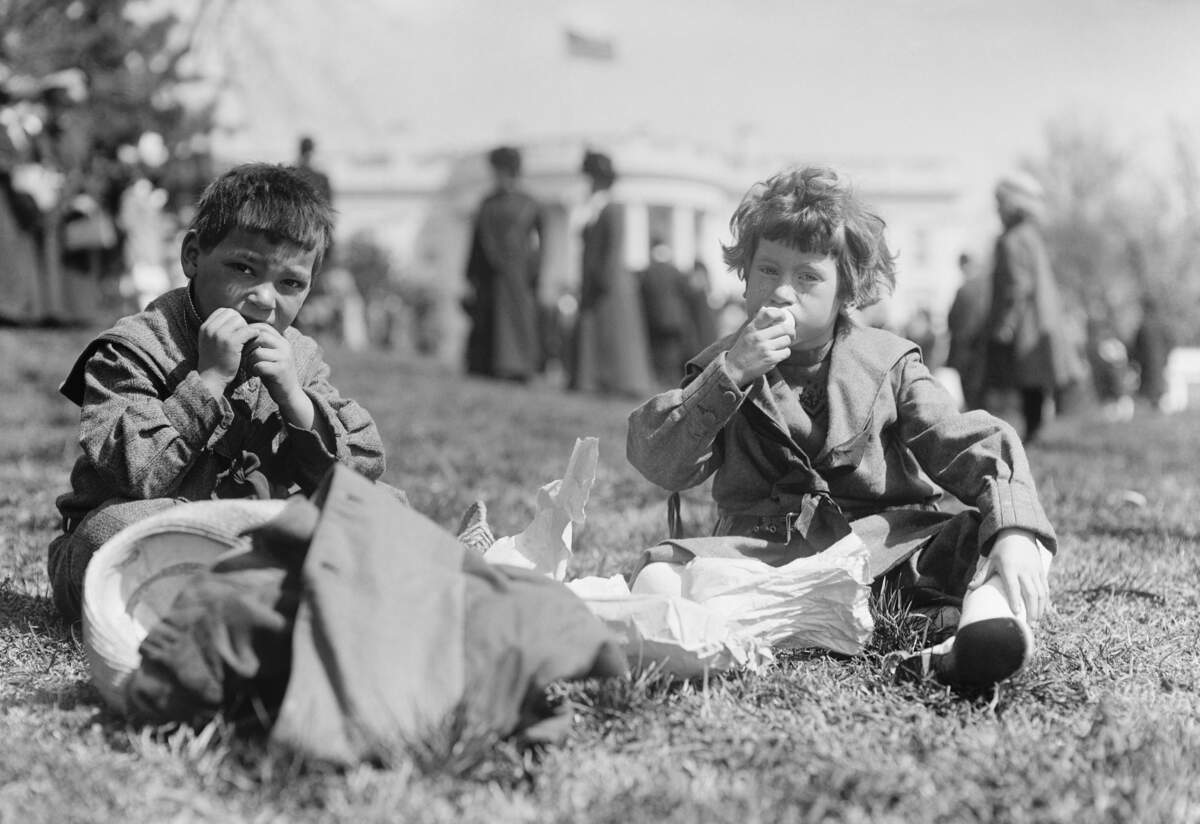
The White House Easter Egg Roll is a children’s Easter Monday celebration centered on rolling decorated eggs across the White House South Lawn. It officially began in 1878, after Congress restricted egg rolling on the U.S. Capitol grounds because the festivities had damaged the landscape. President Rutherford B. Hayes then instructed his guards to admit children who wanted to continue the game at the White House. The White House’s history of the event notes that informal egg-rolling parties may have taken place even earlier under President Abraham Lincoln.
Over time, the gathering grew into a larger festival. President Benjamin Harrison added music from the United States Marine Band in 1889, organized egg-rolling races were introduced in 1974, and the Easter Bunny made an appearance in 1969. In 1981, First Lady Nancy Reagan began the custom of sending guests home with wooden Easter eggs signed by the President and First Lady. The event was suspended during World War I and World War II, and food conservation and White House construction prevented celebrations from 1946 to 1952; President Dwight D. Eisenhower restored the tradition in 1953. After cancellations in 2020 and 2021, the White House Easter Egg Roll returned in 2022.
How to Observe White House Easter Egg Roll
Celebrate by learning about the event’s history through the White House account, then hold a small egg-rolling race of your own. Decorate hard-boiled eggs, mark a finish line, and use spoons to gently guide the eggs across a grassy area. You can also enjoy Easter stories, music, or a springtime gathering inspired by the activities that have accompanied the White House celebration over the years.
Exclusive Content
Enjoying Checkiday? It takes a lot of support from fans like you to run a free website. For exclusive content and other perks, please consider supporting us on Patreon. Thank you!Sponsor
This event does not currently have a sponsor. If you'd like to increase visibility for this event while gaining exposure for yourself or your brand, you can learn more here.Something Wrong or Missing?
We would love to hear from you! Please contact us using this form.Observation Notifications
Would you like to be notified before the next observation? Add this event directly to your calendar with this link. You may also sign up here to be told when other notifications are available!Also on this date…

Don't miss a beat! Subscribe to any of the following feeds for daily updates.
turned_in










 notifications