


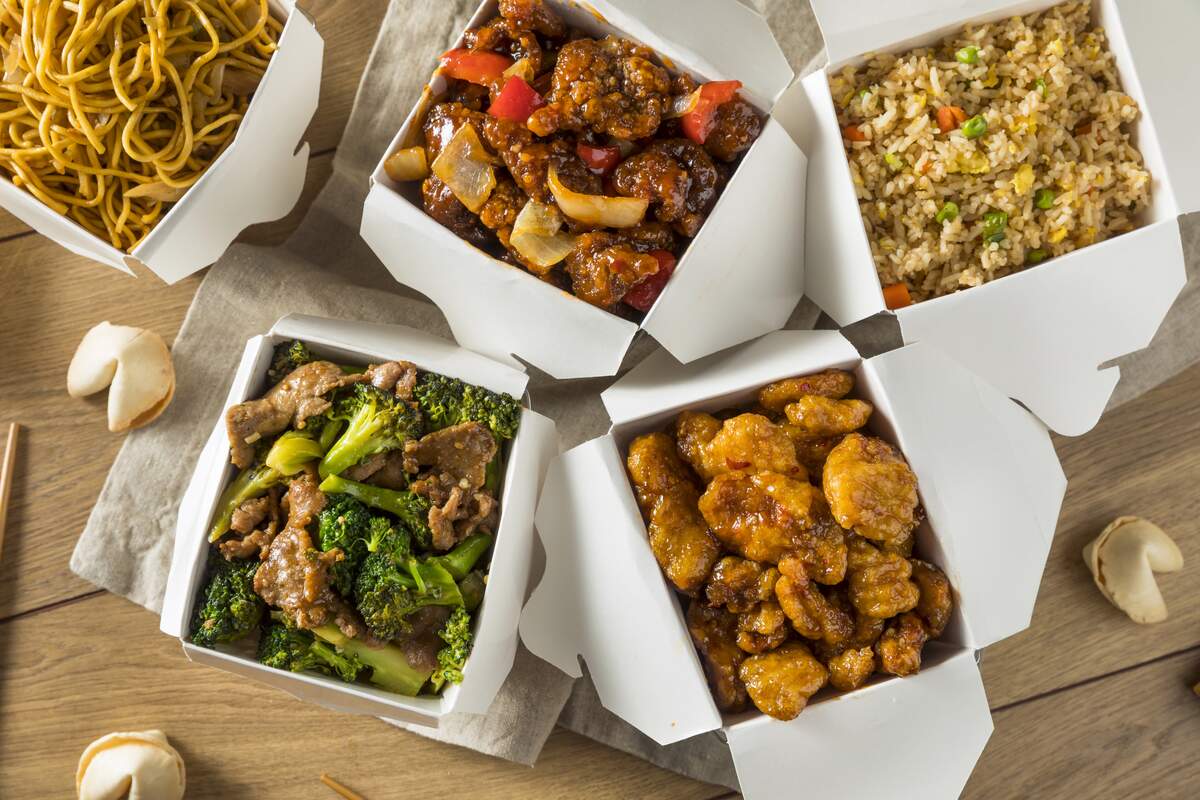
National Chinese Take-Out Day
Also known as
National Chinese Takeout Day
Observed
annually on November 5th
Dates
Tags
Business & Entrepreneurship
Food & Drink
Shopping
Hashtags
Sources
https://anydayguide.com/calendar/4889
https://en.wikipedia.org/wiki/American_Chinese_cuisine
https://en.wikipedia.org/wiki/Chinese_restaurant
https://ljshanghai.com/blog/national-chinese-take-out-day/
https://web.archive.org/web/20171105101102/https://foodimentary.com/2017/11/05/november-5th-is-national-chinese-take-out-day-2/
https://www.anrdoezrs.net/links/100298379/type/dlg/https://www.newspapers.com/image/611508822/
https://www.thrillist.com/eat/nation/chinese-food-history-how-american-chinese-cuisine-is-different-thrillist-nation
It's Chinese Take-Out Day! With the influx of Chinese immigrants to California during the Gold Rush in the mid-1800s, working as railroad workers and miners, the groundwork was laid for what would become American Chinese food in the United States. The first Chinese restaurants in the United States opened in San Francisco in 1849. Because of prohibitive laws that were implemented after the immigrants' arrival, including the Chinese Exclusion Act and laws that forbid land ownership, many Chinese immigrants went on to open restaurants and laundries, first in California, but then across the country, particularly in bigger cities such as New York City. Many of these first-generation Chinese immigrant restaurant owners made a significant enough income to send their children to colleges and universities, helping Chinese immigrants achieve the American Dream. The restaurants also brought white American culture in contact with Chinese culture, helping break down racial barriers and discrimination.
American Chinese restaurants, owned and operated by Americans of Chinese descent, first offered two different menus, a Chinese menu and an American menu. The owners soon created American Chinese dishes, with Chinese menus being adapted to American tastes, creating a cuisine distinct from traditional Chinese food. There were no longer two menus, just one that had American Chinese food, known also as Sino-American cuisine, and informally and simply as Chinese food in the United States. Most American Chinese restaurants cater to non-Chinese customers today.
Because of limitations to accessibility with certain ingredients, the Americanized menu had a number of ingredients that weren't native to China, like broccoli, yellow onions, tomatoes, and carrots, which replaced Chinese vegetables like daikon and green onions. Many of the recipes were adapted from and inspired by Cantonese cuisine; it was from Guangdong province in South China that 20,000 to 30,000 Cantonese immigrants had come during the Gold Rush. Sweet syrups and sauces helped drive the popularity of the food, being made with canned fruits like cherries and pineapples, which were more readily available with the wider availability of canned goods. New cooking techniques like stir-frying and steaming also entered American culture.
Some popular American Chinese dishes that are not regularly found in China include chop suey, General Tso's Chicken, pepper steak, crab rangoon, egg rolls, orange chicken (there are some dishes similar to it in China), Mongolian beef, and fortune cookies. Some dishes common on American Chinese restaurant menus that are popular in China as well include spring rolls, fried wontons, Kung pao chicken, fried rice, lo mein, and chow mein. There are many other American Chinese dishes.
While there are sit-down American Chinese restaurants, there are many more Chinese take-out restaurants, which are also known as Chinese takeouts, or Chinese takeaways in the United Kingdom—the establishments we celebrate today on National Chinese Take-Out Day. These restaurants are designed specifically for takeout, not just having it as an option. Chinese takeout started becoming popular in the United States following World War II. It started in the cities and then expanded to the suburbs. It became a favorite because it was somewhat inexpensive, traveled well, tasted good—with lots of sugar and salt—and was somewhat exotic (but not too exotic, since it had been adapted to American tastes). A common sight at these restaurants is folded paper boxes known as oyster pails, which were traditionally used to transport oysters. They were adapted to restaurants, especially to Chinese restaurants for takeout, because they could transport many types of foods. They were first used to transport chop suey and Mongolian beef.
By 2019, there were more than 50,000 Chinese restaurants in the United States, the majority offering takeout. Major Chinese takeout restaurants include Panda Express, Manchu Wok, Pei Wei Asian Diner, and P.F. Chang's, not to mention the thousands of local takeout restaurants. They are all extra busy today because it's National Chinese Take-Out Day!
How to Observe National Chinese Take-Out Day
Order Chinese takeout! Maybe you have a local go-to spot, or maybe you can order from a local restaurant you've never tried before. Or, order from a chain such as Panda Express, Manchu Wok, Pei Wei Asian Kitchen, or P.F. Chang's. Wherever you go, check for specials in honor of the day. Post how you are celebrating on social media, tagging the restaurant you get takeout from and including pictures of your food and the hashtag #NationalChineseTakeOutDay.
Exclusive Content
Enjoying Checkiday? It takes a lot of support from fans like you to run a free website. For exclusive content and other perks, please consider supporting us on Patreon. Thank you!Sponsor
This event does not currently have a sponsor. If you'd like to increase visibility for this event while gaining exposure for yourself or your brand, you can learn more here.Something Wrong or Missing?
We would love to hear from you! Please contact us using this form.Observation Notifications
Would you like to be notified before the next observation? Add this event directly to your calendar with this link. You may also sign up here to be told when other notifications are available!Also on this date…


Don't miss a beat! Subscribe to any of the following feeds for daily updates.
turned_in














 notifications